Technology
Invisalign vs Traditional Braces: What’s Best for Adults in Singapore?
Orthodontic treatment is no longer just for teenagers. In recent years, more adults in Singapore have chosen to straighten their teeth, not only for aesthetics, but also for long-term oral health and function.
If you are considering improving your smile, you are likely deciding between clear aligners such as Invisalign and traditional metal braces. Both options are effective, but they differ in appearance, comfort, flexibility, and suitability depending on your case.
Understanding these differences can help you choose a solution that fits both your dental needs and your lifestyle.
Why Adults Seek Orthodontic Treatment
Crooked or misaligned teeth can lead to more than cosmetic concerns. They may contribute to:
Difficulty cleaning between teeth
Increased risk of gum disease
Uneven tooth wear
Jaw discomfort or bite strain
Food trapping and plaque buildup
For working professionals, many hesitate because they assume braces are too noticeable. However, modern orthodontic options are far more discreet and comfortable than they were years ago.
The key is selecting the right treatment based on clinical assessment, not assumptions.
What Is Invisalign?
Invisalign is a clear aligner system designed to gradually move teeth into alignment using a series of custom-made trays.
These trays are:
Transparent and discreet
Removable for eating and cleaning
Designed digitally using 3D planning technology
Each aligner is worn for approximately one to two weeks before progressing to the next stage. The aligners apply gentle, controlled pressure to shift teeth over time.
Many adults prefer this option because it allows there to straighten their teeth without drawing attention during treatment. For individuals in professional or client-facing roles, discretion can be an important factor.
What Are Traditional Metal Braces?
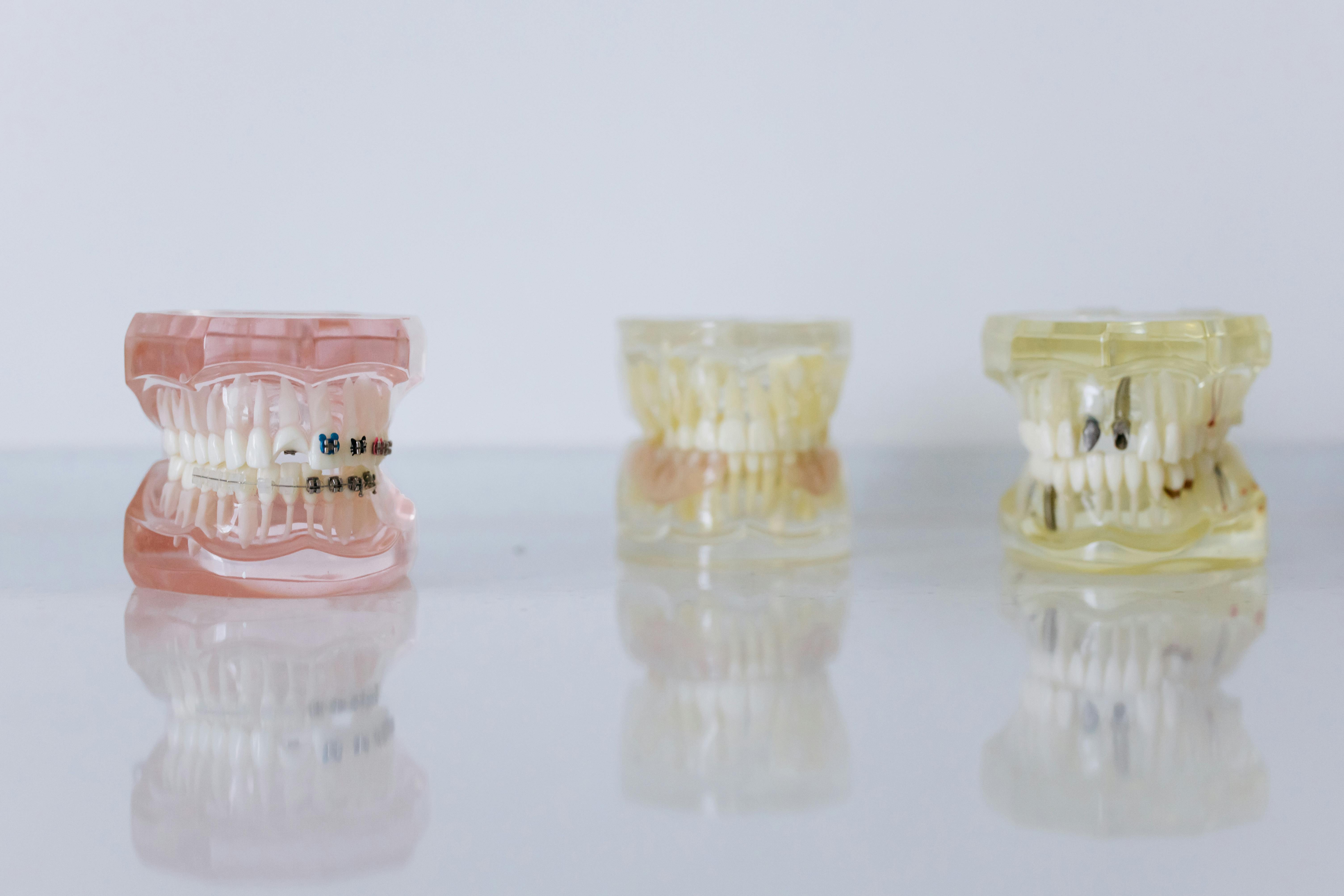
Traditional braces use metal brackets bonded to each tooth, connected by wires that are periodically adjusted to guide teeth into alignment.
Although more visible than clear aligners, modern braces are smaller and more refined than in the past. They remain one of the most reliable solutions for complex orthodontic cases.
Because braces are fixed in place, they work continuously without requiring patient compliance in terms of wear time. This can be beneficial in cases that demand precise control over tooth movement.
Comparing Invisalign and Braces
While both options aim to achieve properly aligned teeth, there are important differences to consider.
Appearance
Clear aligners are nearly invisible when worn. Most people will not notice them during conversation.
Metal braces are visible, though less bulky than older designs. For some adults, visibility is not a concern, while for others it plays a significant role in decision-making.
Comfort
Clear aligners have smooth edges and generally cause less irritation to the inner cheeks and lips.
Braces may cause temporary discomfort after adjustments, and brackets can occasionally irritate soft tissues. However, both systems create pressure during active tooth movement, which may cause mild soreness regardless of the method used.
Effectiveness
For mild to moderate crowding, spacing, or alignment issues, Invisalign can produce excellent results.
For more complex cases involving severe rotation, vertical adjustments, or significant bite correction, traditional braces may provide greater mechanical control.
A proper assessment determines which option will deliver stable, predictable outcomes.
Flexibility and Lifestyle
One of Invisalign’s advantages is removability. Aligners can be taken out while eating, allowing patients to enjoy meals without dietary restrictions. Oral hygiene is also easier, as brushing and flossing can be performed normally.
Braces require more attention to cleaning and avoiding certain hard or sticky foods. However, because they are fixed, they eliminate the risk of forgetting to wear them.
Success with Invisalign depends on consistent wear, typically 20 to 22 hours per day.
Cost Considerations
Cost varies depending on case complexity and treatment duration.
In general, Invisalign treatment in Singapore is comparable to traditional braces, though aligners may sometimes be slightly higher due to digital planning and laboratory fabrication.
Patients often focus on pricing first, but long-term stability and proper supervision should always be the priority. Orthodontic treatment is a medical procedure, not simply a cosmetic product.
A consultation provides clarity on total treatment cost, expected duration, and payment options.
Which Option Is Better for You?
There is no universal “best” solution.
Invisalign may be ideal if:
Your case is mild to moderate
You prefer a discreet appearance
You can commit to consistent wear
You value the flexibility of removability
Traditional braces may be recommended if:
Your case is more complex
Significant bite correction is required
You prefer a fixed solution that works continuously
The decision should be guided by clinical findings rather than marketing claims.
Long-Term Results and Retention
Both Invisalign and braces aim to achieve properly aligned teeth and improved bite function.
After active treatment, retainers are required to maintain results. Teeth naturally tend to shift over time, and retention ensures the alignment remains stable.
The long-term outcome depends more on proper planning and retention than on which system was used.
Making an Informed Decision
Orthodontic treatment is an investment in both confidence and oral health.
For adults considering treatment in Yishun or Ang Mo Kio, a detailed consultation allows for:
Assessment of alignment complexity
Discussion of lifestyle preferences
Clear explanation of treatment timeline
Transparent cost breakdown
When properly planned and supervised, both Invisalign and traditional braces can achieve excellent results.
The most important step is receiving professional evaluation to determine which approach suits your dental structure and long-term goals.