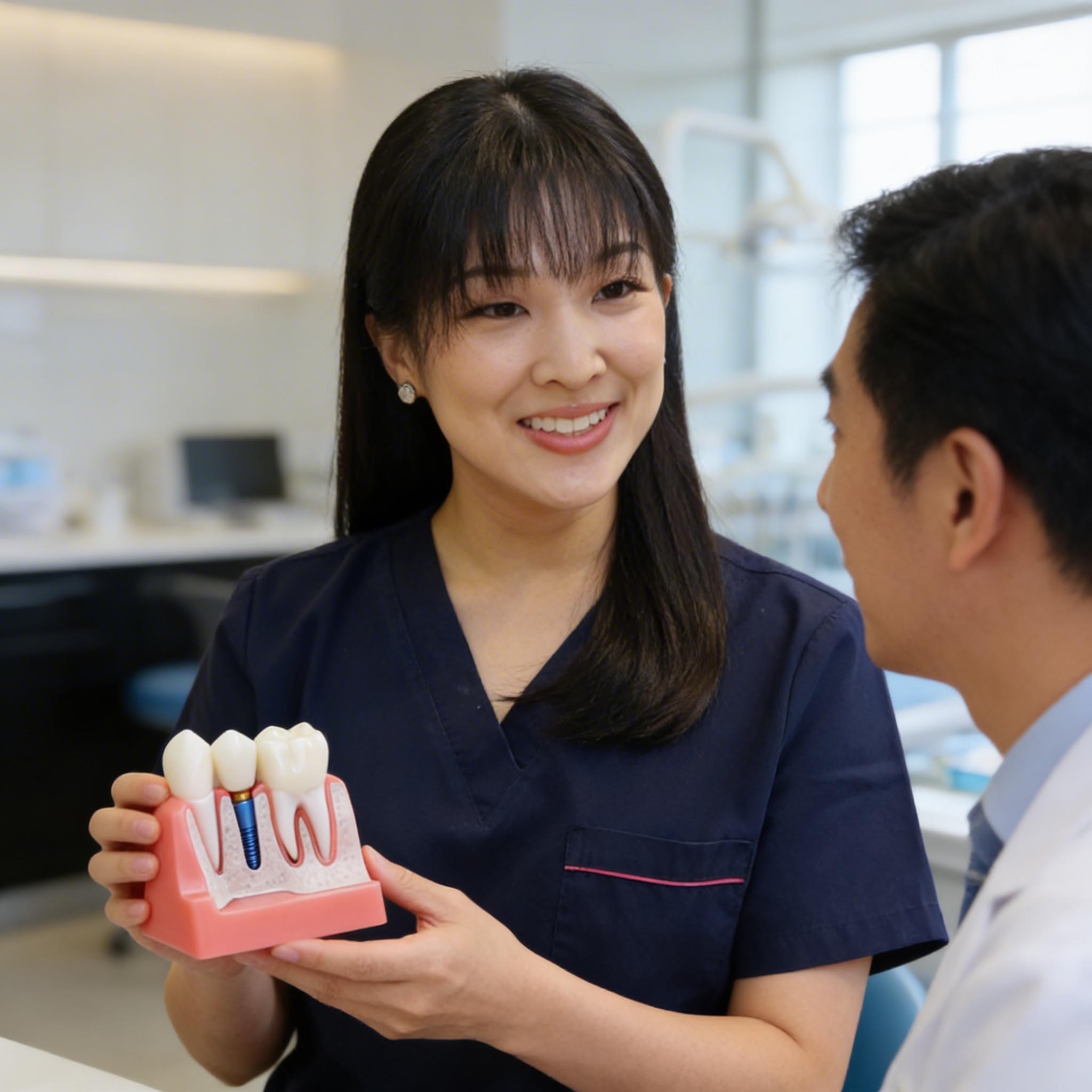

Top 3 Success Points for Dental Implants
1. Premium Materials and Quality
The success of a dental implant begins with the quality of materials used. We use only high-grade titanium implants with advanced surface coatings to ensure strong bone integration, durability, and long-term success.
2. Precise Positioning and Planning
Every case is carefully planned with detailed X-rays and digital analysis such as bone structure, bite alignment, and aesthetics to achieve optimal implant placement for both function and natural aesthetics.
3. Experience and Personalised Guidance
Dental implants can feel complex, but we guide you through every step. From consultation to aftercare, our experienced team guides you through every step—ensuring clarity, confidence, and results tailored to your needs.

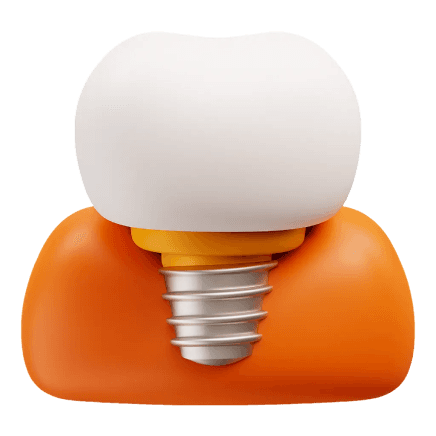
Implant Crown (Single Tooth Replacement)
Used when one tooth is missing.
A custom crown is attached to a single implant, restoring appearance and chewing function without affecting adjacent teeth.
Implant Bridge
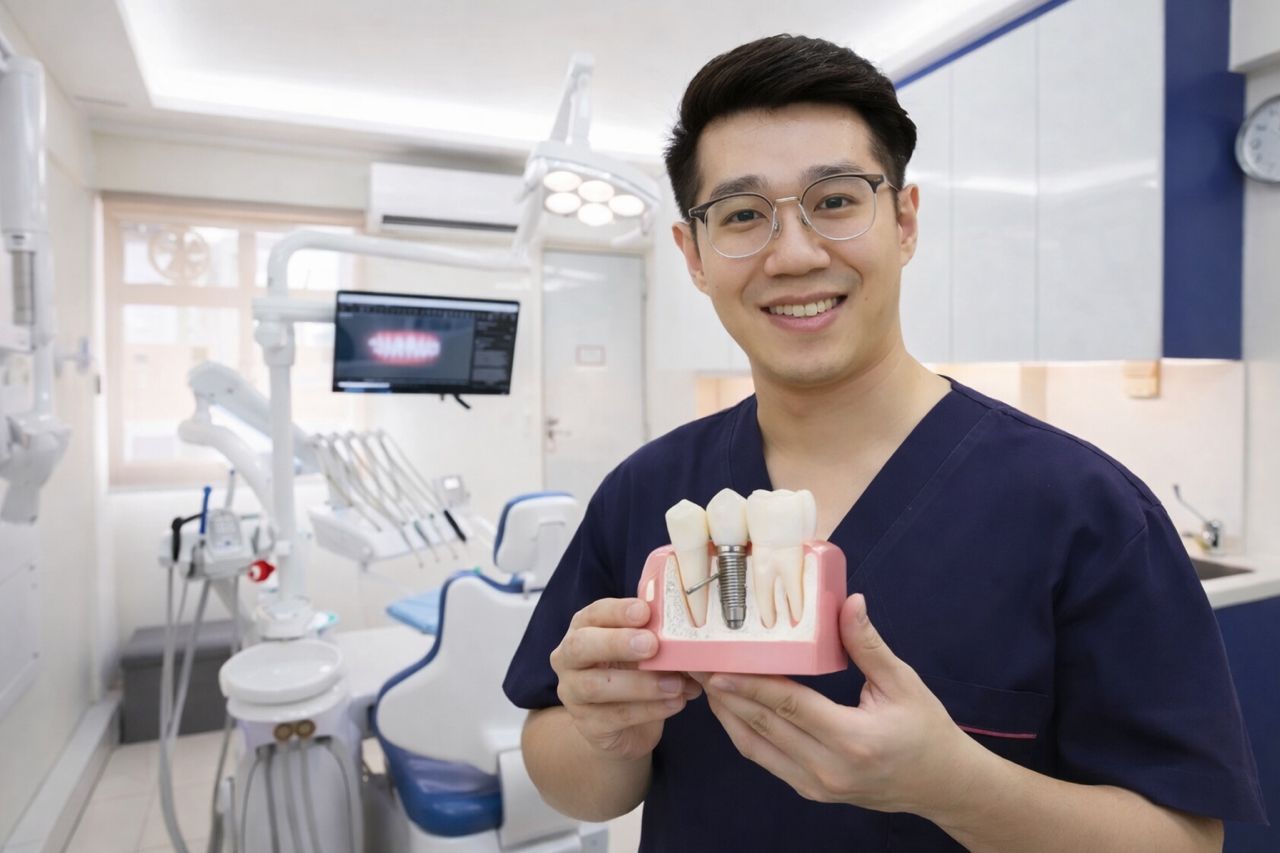
An implant bridge is recommended when multiple teeth are missing in the same area.
Instead of placing one implant per tooth, two or more implants are used to support a fixed bridge. This provides strong support while reducing the number of implants required.
Implant bridges are:
Fixed and non-removable
More stable than traditional bridges
Designed to restore proper bite function
Implant-Supported Denture
For patients missing many or all teeth, an implant-supported denture provides greater stability compared to conventional removable dentures.
The denture is secured onto strategically placed implants, which:
Improve chewing ability
Reduce movement or slipping
Enhance comfort
Help preserve jawbone structure
This option is ideal for patients seeking improved retention without full fixed implant reconstruction.



Dental implants may be recommended when:
One or more teeth are missing
A stable, fixed tooth replacement is preferred
Adjacent teeth should not be altered
Jawbone health is adequate for implant support
Long-term durability is a priority
A dental assessment is required to determine suitability for implant treatment.
1
Step 1
Dental Assessment
The dentist evaluates oral health, bone condition, and treatment suitability.
2
Step 2
Implant Placement
The implant fixture is placed into the jawbone under local anaesthesia.
3
Step 3
Healing and Restoration
After healing and integration, a custom dental crown or restoration is attached to the implant.

Common Questions About Dental Implants
What Happens If Missing Teeth Are Not Replaced?
How long do dental implants last?
Are dental implants safe?
Is dental implant treatment painful?















Location













Related Articles
Expert Advice for Pain-Free, Confident Dental Care


